Research · 2020 · King's finals, October 2019 to June 2020
Brain-Computer Interface
The other finals project: teach a model a few mental signatures and see if the computer would listen.
I wanted the computer to notice I was trying
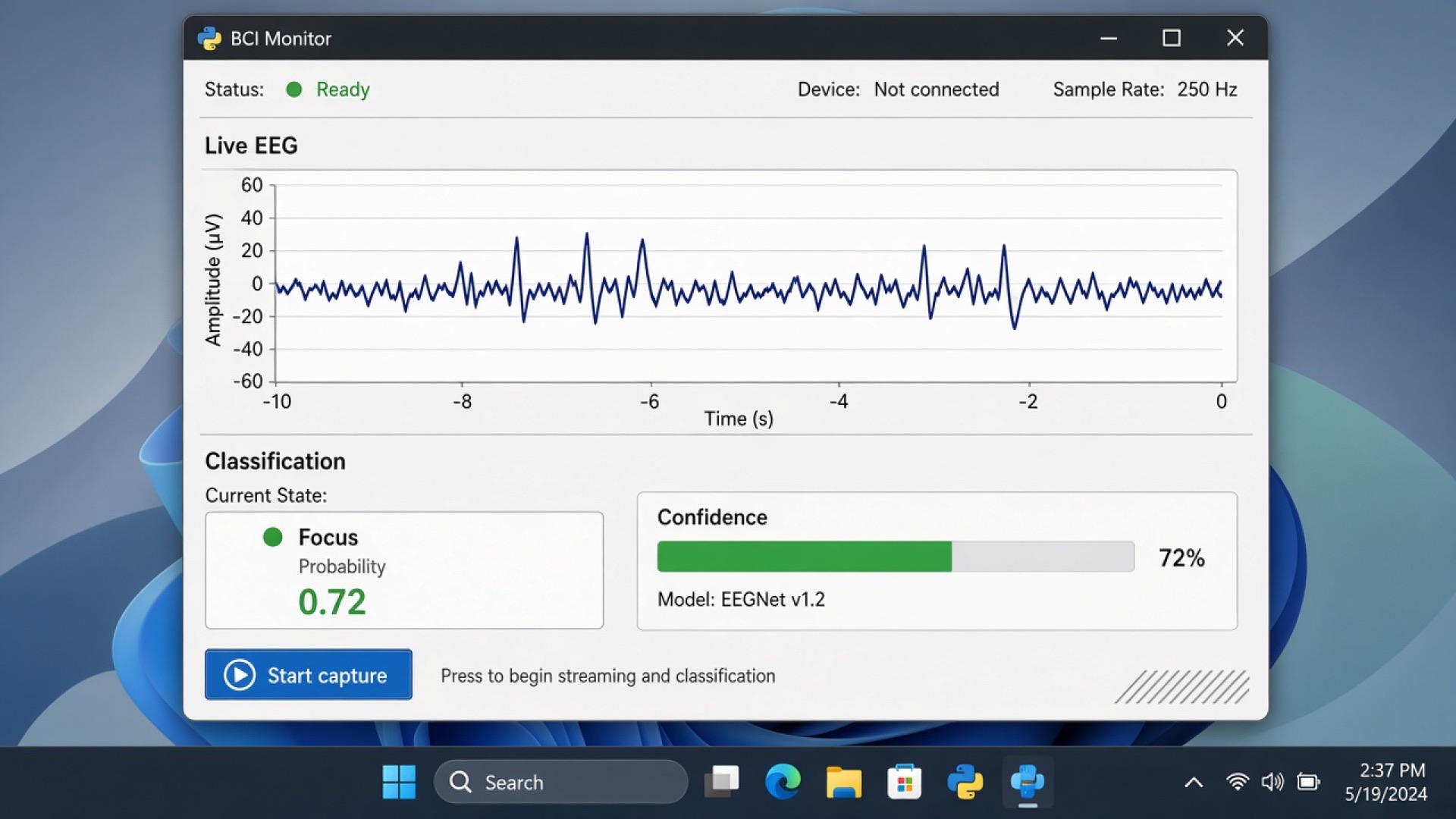
Same finals season as the cave. I was greedy. I wanted to know if a student rig could tell a handful of signatures apart and poke the OS when the confidence cleared a line. Colab when the laptop wheezed. PyTorch for the network. A small Python process between model and machine. Tkinter because I needed to see the lie as it happened.
The 3D-printed headset was a sketch of sensors, not a medical device. I said that then and I will say it now. The useful scar is knowing the distance between a notebook that scores well and a product you would let a stranger wear.
What I kept after the poster came down
VideoForge2 and BhashaBridge are products. This was the first time I trained a model to be an input device. I still use that distance as a habit. If I cannot explain the loop without a slide titled Outcome, I am not done.